HHR Departments
Management and Administration
HHR’s Management and administration section oversees the coordination and administration of research projects under the partnership. The team comprises Principal and Co-Principal investigators, Operations Manager, Project manager, administrative and support staff. This section is responsible for the comprehensive coordination and administration of all research activities under the partnership, ensuring that projects are managed efficiently and adhere to all regulatory and compliance standards.
Social and behavioral science (SBS)
The Social and Behavioral Science section was established as a key component of creating smooth relationship between the community in the catchment area and Hararghe Health Research (HHR) partnership. Owning to the sensitivity of CHAMPS program; HHR’s first and an umbrella project, it was obviously challenging to establish community trust and assure acceptance. Hence, CHAMPS-Ethiopia SBS team was established in May 2017.
The initial activity was to conduct formative research, and the primary findings showed that the community finds it difficult to accept taking tissue samples from a dead child. Specially, the religious and cultural values the community stands against experimenting on a deceased person. Families were not willing to consent to MITS because of rumors about organ theft.
In the move of reversing the rumors, the social and behavioral science (SBS) team held a workshop with district, zonal, regional, and national Islamic affairs regarding the goals of the research and its advantages for the community. Based on this, the National Islamic Affairs approved letter (Fatwa) guaranteeing that the study is helpful for improving child health and reducing child mortality.
Moreover, the team employed various community engagement techniques including discussions with religious and village leaders, recruiting community health volunteers, establishing community advisory boards (CAB), organizing participatory community theater (TfD), transmission of radio programs, health outreach campaigns, community discussions, and conducting open-lab-visits to familiarize the community with the program.
Currently, it is possible to reach out to the mass community and create awareness about the importance of HHR’s activities in reducing under-five child mortality and improving maternal health.
HDSS
The Health and Demographic Surveillance System (HDSS) team at Hararghe Health Research (HHR) plays a crucial role in monitoring and improving population health in Eastern Ethiopia. Established in the Haramaya district, the HDSS covers 12 kebeles (sub-districts) and operates at altitudes ranging from 1600 to 2100 meters above sea level.
The HDSS team is part of the Child Health and Mortality Prevention Surveillance (CHAMPS) network, which aims to reduce child mortality by generating reliable health and demographic data. This data helps inform policies and strategies to prevent child deaths. The team conducts regular surveillance to gather actionable health information, focusing on maternal and child health.
Laboratory
hararghe Health Research (HHR) Laboratory, accredited by the Ethiopian Accreditation Services (EAS), is a state-of-the-art facility dedicated to advancing health sciences research. The lab focuses on maternal and child health, conducting microbiology, molecular diagnostics, and histopathology research.
The accreditation process began in April 2022, with an on-site assessment conducted later that year. By March 2023, the lab had addressed all identified non-conformities, achieving full accreditation. This accreditation ensures that HHR’s laboratory meets high standards of quality and reliability in its research activities.
Information Technology (IT)
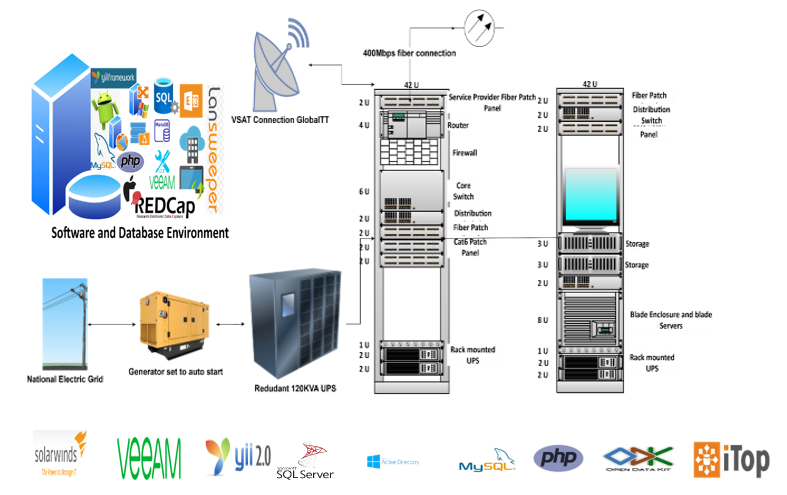
At Hararghe Health Research (HHR), the Information Technology (IT) team is a beacon of modernization and collaboration, integral to the organization’s research missions. They champion innovation and teamwork, ensuring that their objectives align with the overarching goals of HHR. The key objectives include Secure Electronic Data Management, where the team will implement robust data collection, synchronization, and storage solutions while guaranteeing secure and straightforward data access. In terms of network reliability, the IT team is committed to providing consistent and accessible internet and intranet services.
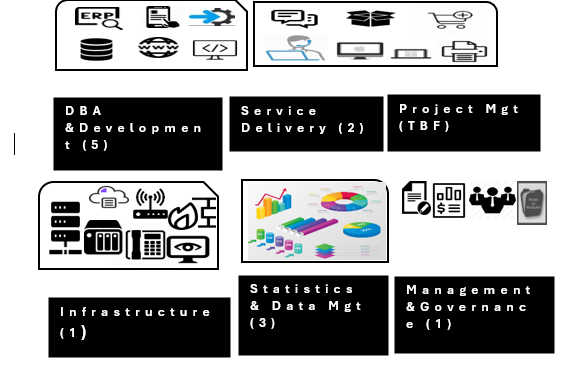
System Availability is another critical area, with a focus on maintaining IT systems’ high availability and instituting comprehensive network enterprise backup and disaster recovery plans. The team also underpins Organizational Communication by facilitating seamless interaction and collaboration through email, Office 365, and other platforms. IT security enforcement is a priority, with stringent enterprise IT security measures and regular audits of organizational electronic resources. It adeptly manage Data Center Operations, overseeing storage and server infrastructure. Moreover, the team places a strong emphasis on capacity building, concentrating on local capacity development to bolster IT skills within HHR. This multifaceted approach ensures that the IT team not only supports but also propels the organization’s research endeavor.
Clinical team
The HHR clinical team is dedicated to reducing child mortality through a variety of important activities. They employ methods such as minimally invasive tissue sampling, histopathology, molecular and microbiologic diagnostics, clinical data abstraction, and verbal autopsies to identify and analyze specific causes of stillbirth and death in children under five. The data collected is then shared to drive life-saving interventions and inform policy changes. The team is part of a global network that includes diverse, multi-sectoral partnerships.