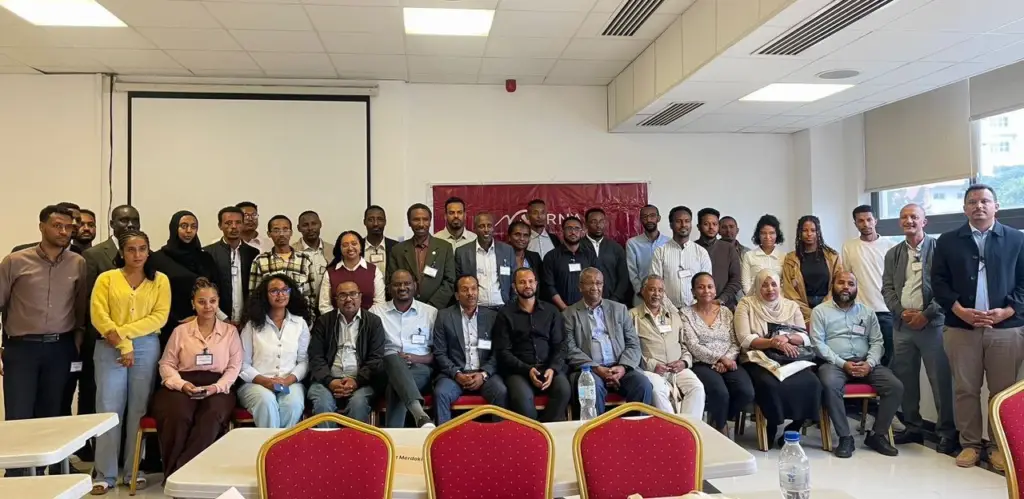
HHR’s Immunisation Readiness Network in Africa and Asia (MIRNA) held its results dissemination workshop at the Ethiopian Public Health Institute (EPHI) on June 25, 2026. The event brought together a diverse group of key stakeholders and partners, including the Federal Ministry of Health, the Ethiopian National Immunization Technical Advisory Group (E-NITAG), Ethiopian Public Health Institute, Regional Health Bureaus, universities, and research institutions. Global partners such as Centers for Disease Control and Prevention, The Task Force for Global Health, PATH, Clinton Health Access Initiative, Save the Children, and members of the recently launched RSV Working Group also actively participated.
Besides, professional societies, including Ethiopian Pediatrics Society, Ethiopian Society of Obstetricians and Gynecologists, Ethiopian Nurses Association, and Ethiopian Midwives Association were well-represented.
· During the workshop, MIRNA team presented findings from its four core work packages: The disease burden of Respiratory Syncytial Virus (RSV) and Group B Streptococcus (GBS).
· Economic evaluations regarding the introduction, delivery, and cost-effectiveness of the maternal RSV vaccine.
· A situational analysis of Ethiopia’s current immunization platforms and systems.
· Social and behavioral factors influencing maternal vaccine demand and uptake.
The presentations sparked deep, engaging discussions among participants, emphasizing the relevance of this evidence to shaping Ethiopia’s immunization landscape.
HHR through its MIRNA project remains committed to generating the rigorous science that moves maternal immunization from research into national policy.